

Why Fernando Mendoza is the NFL’s Next Franchise Quarterback
As the 2026 NFL Draft cycle enters its most critical phase,...

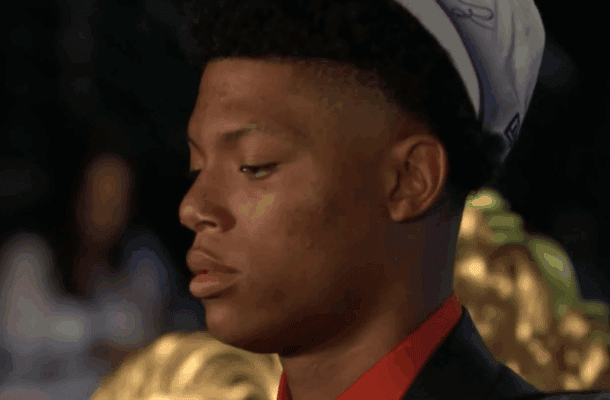
The 2025 NBA Draft spotlight turned unexpectedly sour for Ace Bailey, not because of his talent—but due to questionable decision-making behind the scenes and increasingly vocal controversy around his agency’s strategy. Widely regarded as a gifted shot-maker with a smooth offensive game, Bailey’s draft stock has taken a hit, not from his play, but from the growing perception that his camp is mismanaging his image and opportunities.
At the center of the conversation is Ish from the Joe Budden Podcast circle—connected to Bailey through family ties and industry influence—whose business-first approach may be backfiring. Critics argue that the agency representing Bailey has leaned into trying to “reinvent” the revenue model for athletes, possibly advising him to avoid pre-draft workouts and traditional media engagements in favor of monetized, controlled platforms like Patreon or Twitch.
“If you want to get paid to interview, go make a Cameo,” one industry insider said. “But don’t expect media to pay you to do their job. That’s not how it works—especially before you’ve proven anything.”
The agency’s tight control over Bailey’s public presence and refusal to participate in typical pre-draft activities—including skipping interviews and workouts—has rubbed teams the wrong way. Some suspect it was a calculated attempt to manipulate where Bailey landed. He made it known he did not want to be drafted by the Utah Jazz, instead preferring Washington, New Orleans, or Brooklyn. Utah took him anyway with the No. 5 pick, despite Bailey’s camp reportedly expressing disinterest.
“I had no idea they were interested,” Bailey said post-draft, sounding more blindsided than honored. According to ESPN’s Jonathan Givony, “This was not one of his preferred destinations… a little bit of a stunner.”
That surprise has led to speculation Bailey could try to force his way out the moment he’s eligible. Fans and analysts alike have questioned if his agency sabotaged his draft standing—either to land him with a team where he’d get more minutes or to engineer a future trade.
Adding more complexity is the Cooper-Bailey family web. Omar Cooper—father of former NBA prospect Sharife Cooper and WNBA hopeful Tea Cooper—is also reportedly involved. Critics argue Sharife, though talented, entered the NBA draft too soon, and Tea, despite being good enough to stay on a roster, never reestablished herself after having a child—an unfortunate reality in the limited-scope WNBA.
That same urgency now surrounds Bailey. If the Coopers are pulling strings again, it’s raising red flags among executives about history repeating itself.
Ultimately, Bailey’s natural ability isn’t in question. He’s a versatile scorer with size and elite touch. But if his representation continues to alienate teams, deny access, and project entitlement before he’s even played a game, he may become a cautionary tale for future prospects.
In the modern NBA, image and professionalism matter as much as talent. And right now, Ace Bailey’s camp is putting both at risk.

As the 2026 NFL Draft cycle enters its most critical phase,...

Dante Moore’s decision to return to Oregon has only added fuel...
Sports Illustrated’s latest 2026 NFL mock draft offers a glimpse at...

The New York Jets just detonated the reset button. After flipping...

After a whirlwind draft week filled with speculation, controversy, and whispers...


Southern University is reportedly set to hire former NFL star Marshall...

Elite offensive tackle prospect Felix Ojo has secured a massive payday—before...

The future of Texas Longhorns football just got even brighter with...